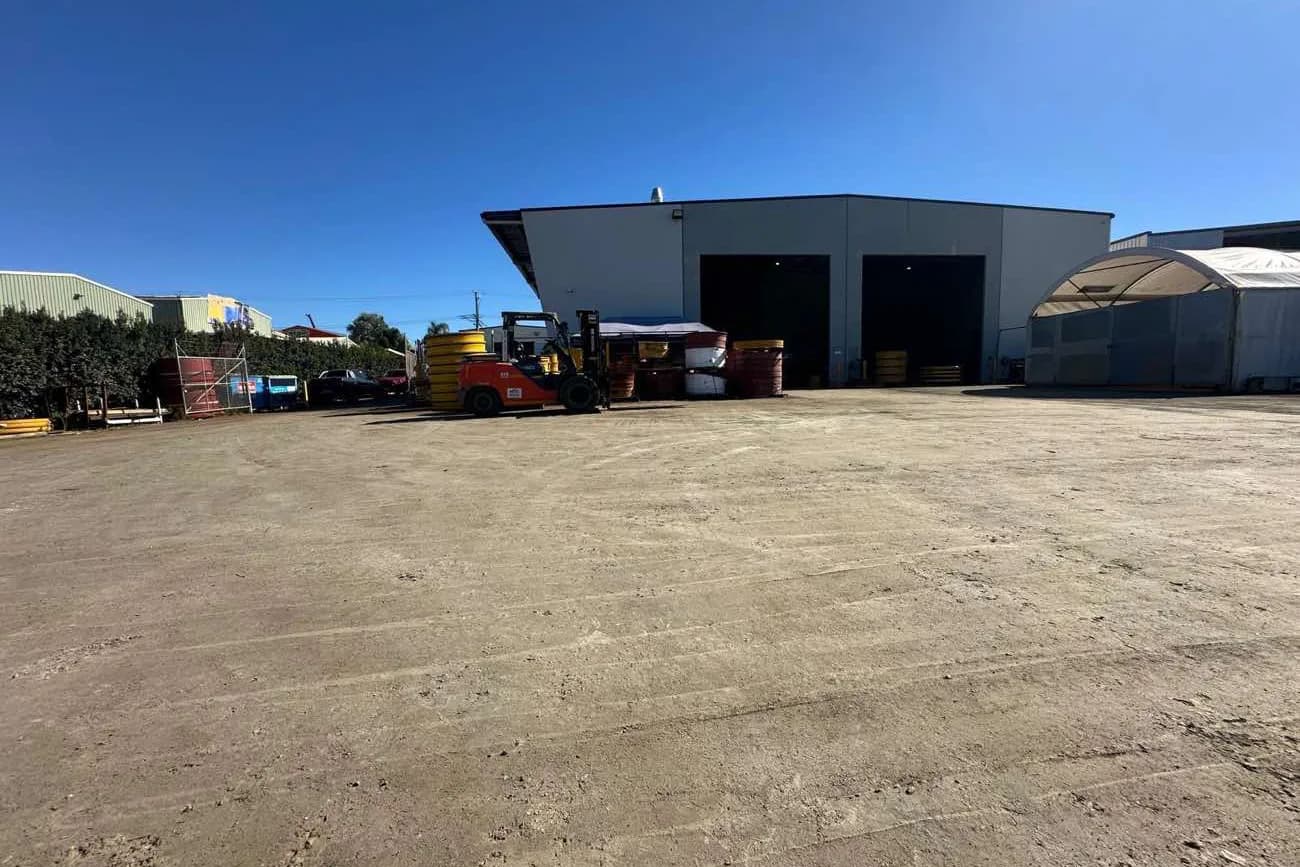
The base you already have, turned into standing ground.
SuperBase is not a pavement, and its primary mode is not a surface spray. It is an additive introduced into the base during the lay phase and carried through every moisture process, so the binder sits through the full depth of the layer rather than on top of it.
~75 mm
Existing base, scarified
Approximately. Additional roadbase is imported only where design levels require it.
Mixed through the full depth. Built, not coated.
The binder goes in with the water and is mixed through the whole layer, then wet rolled. Compaction develops the bond, so the surface strength comes from the layer itself.
Grader. Water cart. Roller. No pour.
A surface spray
Binder on top of the layer.
SuperBase
Binder and water mixed through the full depth of the layer, then wet rolled.
How it is built
Five steps with ordinary plant, and no paving crew.
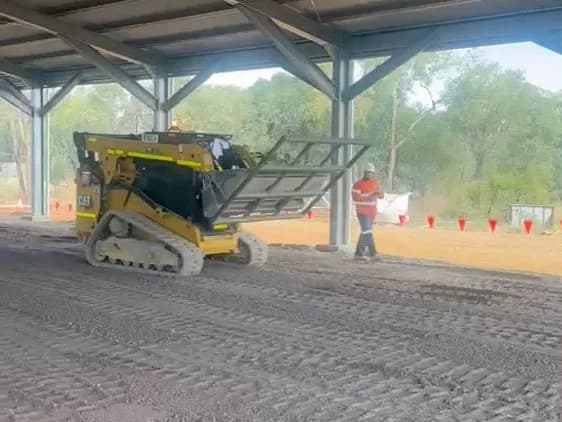
01 — Trimming the scarified base Prepare
Loose stone and bull dust are graded off and the existing yard base is scarified to approximately 75 mm. Additional roadbase is imported only where design levels require it. Usually the material already in the yard is all that is needed.
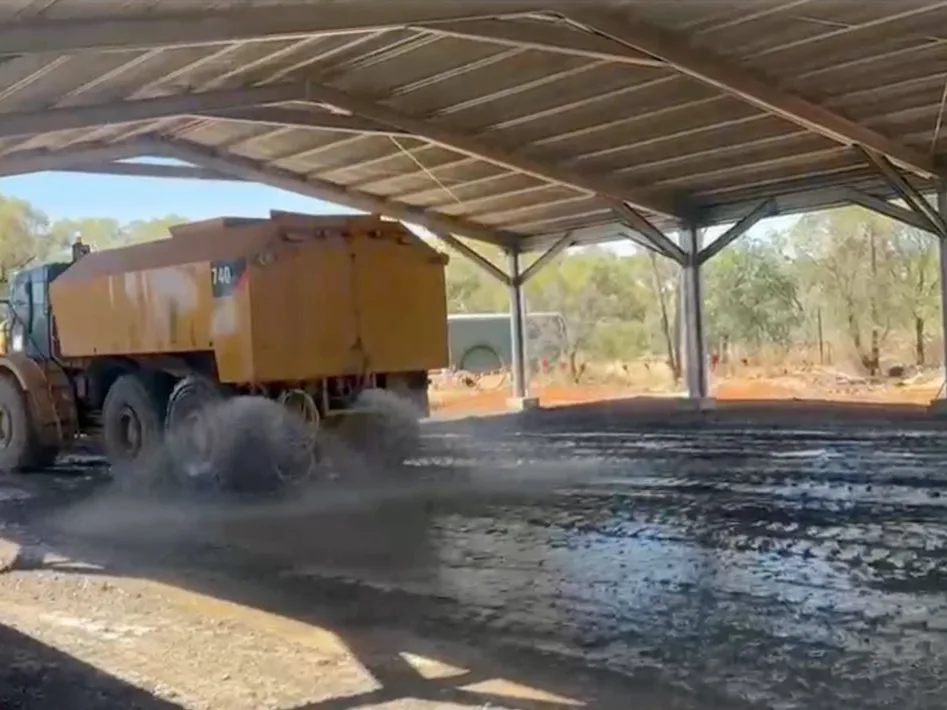
02 — Binder and water through the full depth Dose and mix
SuperBase is introduced with water at a binder-to-water ratio set against your own base material, and mixed through the full depth of the layer. Where new base has been added, the binder runs through all moisture processes so the new layer does not delaminate from the old.
03 — Trimmed to level and crossfall Grade to level
The treated base is trimmed to design level and crossfall while it is still workable. Getting fall right at this stage is what stops water ponding later, and ponded water is where potholes start.
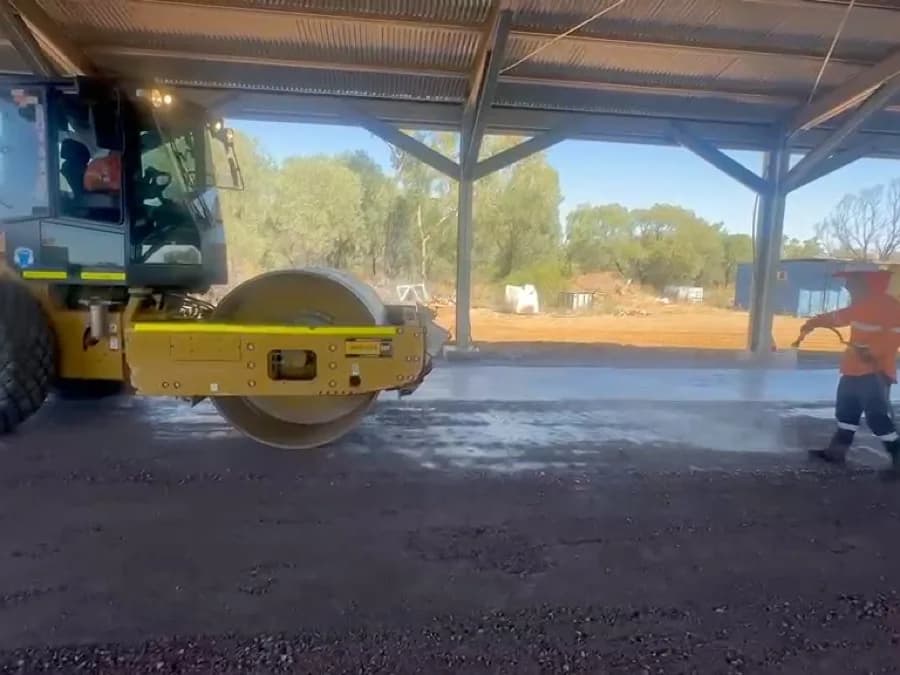
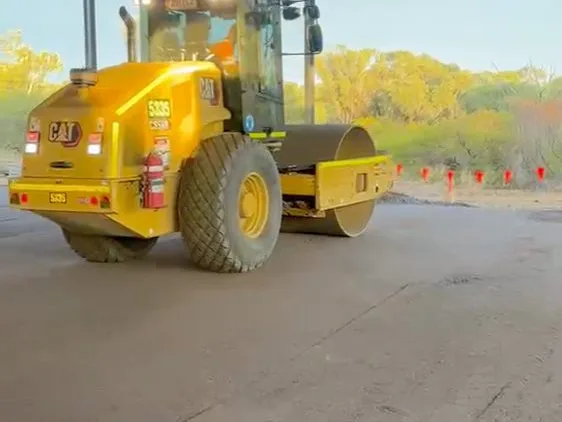
04 — Wet rolling to final compaction Roll and compact
Wet rolling to final compaction with a smooth drum roller. This is the stage that develops the bond: the surface is built, not coated, and it is where the surface strength comes from. Compaction is confirmed on site against the density nominated in the dosage design.
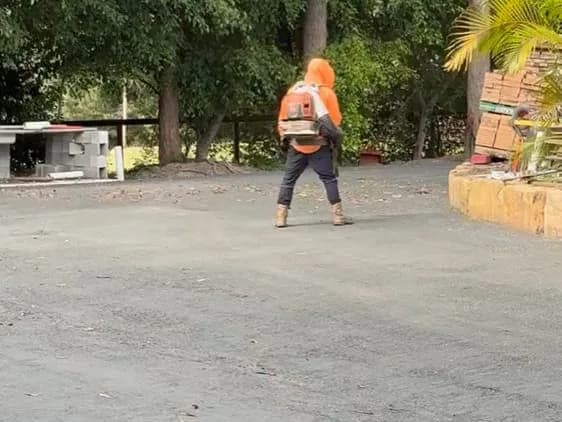
05 — Cured and back in service Cure and return to service
The surface cures to a bound, hard-wearing hardstand and is trafficable within hours of the final roll, against the weeks a concrete pad needs to reach working strength. High-wear running lines can take an organic top coat, a sprayed dressing over the compacted base.
Compaction builds the bond. Testing proves it.
The strength gain is measured, not asserted. The trial area is tested by laboratory CBR on your own yard material, before treatment and after cure, and the result is issued with the trial report: a documented figure rather than a brochure claim.
What the trial report gives you
- Soaked CBR
- Before treatment and after cure, on your own yard material. Tested soaked, because that is the condition a yard fails in.
- Depth & compaction
- The treated depth and the density achieved across the trial area, measured on site.
- Dosage rate
- The binder rate that produced the result, so roll-out is priced and specified off a known number.
Nominate one area.
We will treat it, test it, and put the numbers beside a concrete quote and a year of patching.
A trial area tests the surface, the strength figure and the business case at the same time, on your material, in your yard.